PALFINGER Around the Globe: Welcome to Maribor, Slovenia
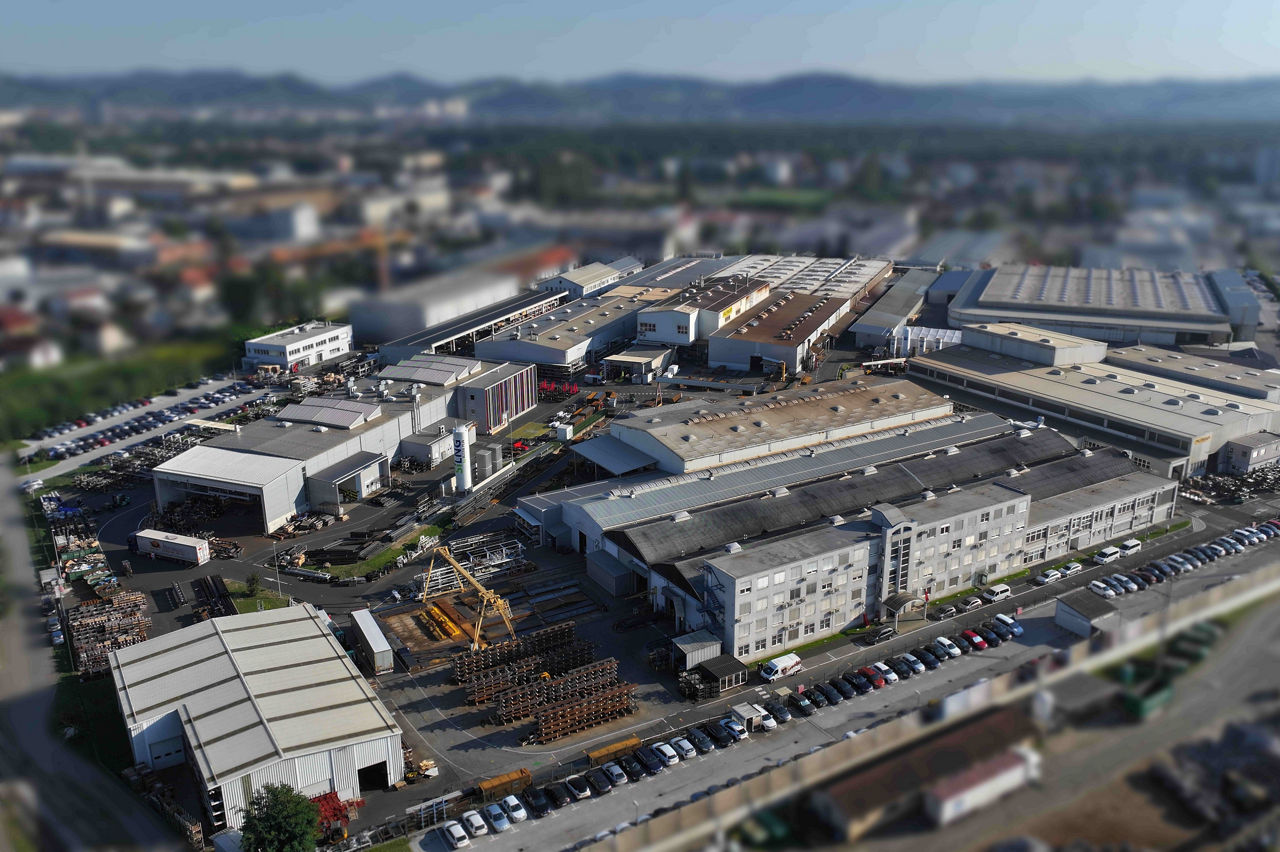
Where PALFINGER brings marine expertise and high-volume manufacturing together under one roof.
In an interconnected world, the strength of a leading technology and mechanical engineering company such as PALFINGER is not only defined by its portfolio of exceptional solutions, but also by its sprawling network of international production facilities. These locations are more than mere dots on a map – they are veins running with innovation and quality. Join us on a journey exploring our marine-related production sites to find out how their distinct expertise continually contributes to our long success story.
Our next stop on the tour through our Marine sites brings us to the historic city of Maribor, nestled amidst lush wine hills, sunny mountain trails, and deep green forests. Known for its rich cultural heritage and vibrant community, Maribor is not just a historical gem but also a hub of innovation. Not too far from the city’s historic center lies PALFINGER’s Maribor plant, established in 1993 and now home to almost 830 employees, including 120 dedicated professionals from PALFINGER MARINE. We spoke with Michael Steiner, the managing director of the plant, to learn more about the operation.
Welcome to Maribor
With a 20-year-long career in the company, Michael is the perfect guide to show us around the plant. “We produce a variety of products, including cranes for both the marine and land-based sectors,” he explains. “Our focus is on marine, offshore, and wind cranes, as well as on a new 3D house printer with code name Titan, a large-scale robotic system capable of automatically printing structures. In 2026, we expect to deliver over 1,020 cranes and Titans,” he adds proudly.
The pride is well-deserved: the facility is nothing short of impressive. Spanning 78,000 m², including a 3,000 m² assembly hall dedicated to PALFINGER MARINE, the site processes approximately 55 tons of steel each day. “Many of our components are sourced in-house,” Michael explains, “which ensures seamless delivery to our many clients across segments such as aquaculture and fishing. This year, for example, we supported projects of our long-standing partners in offshore wind like Siemens Gamesa and Vestas.”
?qlt=85&ts=1785230370804&dpr=off "Michael Steiner, Maribor")
Ensuring excellence in every step
The key to the Maribor plant’s success is no mystery. Meticulous attention to quality and well-established processes ensure that every step of production meets the highest standards. “Every component undergoes strict approval processes with classification societies like DNV,” Michael explains. “This is an essential, but time-consuming process. However, Manufacturing Survey Arrangements (MSA), allow us to streamline it further. Certified PALFINGER employees can internally validate subcomponents with a DNV stamp, meaning only the final crane requires external approval by a classification society surveyor.”
Close collaboration with clients is another key priority for the managing director. “We encourage frequent Factory Acceptance Tests (FAT) to ensure everything meets our clients’ expectations,” he explains. “The introduction of PALFINGER Smart Eye has been a game changer in this regard, enabling clients to perform these tests virtually.”


?ts=1785230370901&dpr=off "PALFINGER production site Maribor")
Precision, planning and flexibility
An operation the size of our Maribor plant certainly poses challenges, especially when it comes to custom cranes, which require precise planning. “Our project-specific cranes push us to think outside the box and plan for the unexpected,” Michael smiles. “For example, some parts, like cable winches, need to be ordered as far as 180 days in advance. We also need to be strategic with our stock management to ensure quick responses.” Quality assurance is also crucial in the planning process. “And we are seeing a trend towards larger custom orders. A crane with a 25-meter-long main arm, for instance, requires extensive production space and additional tools for testing,” Michael adds.
Besides, production is closely tied to ship production schedules. “While output levels can vary from year to year, production is often strongest in the first half of the year, with activity adjusting to project schedules as the year progresses,” Michael explains. One segment of cranes stands out recently, driven by the high demand for PF cranes used on transition platforms on offshore wind turbines. There is also a higher demand for the PK 34000T nacelle crane, which is also used in the offshore wind industry.
As our tour of PALFINGER’s marine production sites comes to a close in Maribor, it’s clear that Michael and his dedicated workforce create the perfect environment for innovation and excellence. From their cutting-edge cranes to their commitment to quality, PALFINGER’s Maribor plant continues to raise the bar and remains a vital part of the PALFINGER family.
Stay tuned for more insights into PALFINGER.